
How to Train a Dog to Use a Doggy Door: A Friendly Guide for Timid Dogs
Posted: 10/09/2025 | BY: Jenna Bruce | Categories: Behavior , Dog , Pet care
A doggy door can feel like a ticket to freedom for your fur baby. It gives them the ability to go outside when they please, enjoy fresh air, and feel a sense of independence. But not every dog sees that little flap in the wall as an opportunity. Many dogs and puppies look at the door as something strange or intimidating, which can make training a challenge.
If you’re wondering how to train a dog to use a doggy door, you’re not alone. With a bit of patience, positive reinforcement, and step-by-step guidance, you can help even the most hesitant dogs learn to love their door of independence.
Why Some Dogs Are Timid Around Doggy Doors
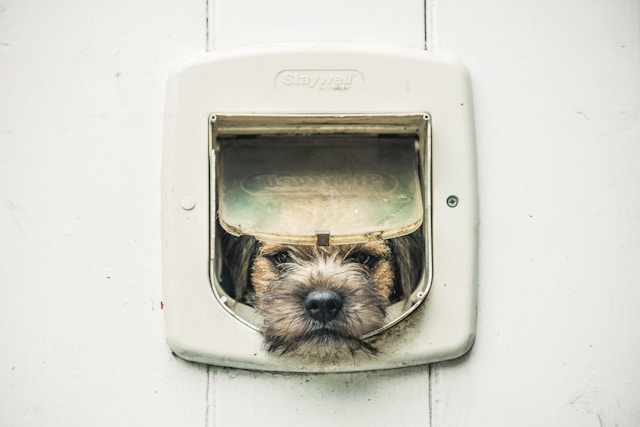
To us, it’s just a convenient flap. To dogs, it’s an unfamiliar, moving obstacle that might feel unsafe. The texture and sound of the flap, the tight space, and the movement can all trigger anxiety.
Puppies are often unsure because they are still building confidence in the world around them. Adult dogs who haven’t been exposed to a doggy door early may also find it confusing. Some may even associate the sound or movement of the flap with fear if they have been startled before.
Understanding this helps you approach training with empathy. The key is to make the doggy door feel safe, familiar, and rewarding.
Step 1: Get Your Dog Comfortable with the Door
Start by letting your dog explore the doggy door at their own pace. Keep the flap open or secure it so it stays still. Encourage sniffing, touching, and exploring, and reward curiosity with treats and praise.
If your dog seems nervous, sit beside the door and provide encouragement in a calm, happy tone. Reward any interactions, no matter how small. The goal here is to remove the sense of mystery and help your dog see that this door is safe.
Some dogs respond well when they see you interacting with the door. You can even walk through it yourself while calling them along. Demonstrating how the door works can make a big difference.
Step 2: Create Positive Associations
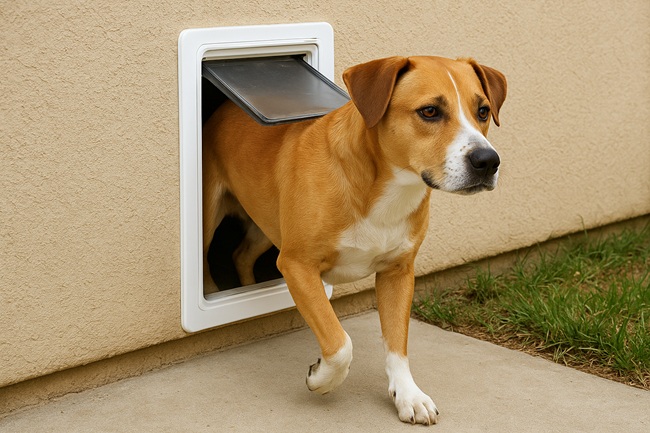
Now that your dog is comfortable being near the door, start linking it to good experiences. Hold the flap open and call your dog through while offering a favorite treat. If they hesitate, avoid pulling or pushing them. Instead, maintain an upbeat tone and reward every small step forward.
Having one person on each side of the door can help. Call your dog from one side and reward them on the other. Repeat this several times until your dog feels confident moving through the open door.
Step 3: Introduce the Flap Gently
Once your dog can pass through an open space comfortably, gradually lower the flap so it rests lightly on your hand. Encourage your dog to push it with their nose. Reward all progress.
If the sound startles them, lift the flap slightly again and reward calm behavior near the door. Over time, let the flap move naturally. Remember, confidence grows through gentle repetition, not pressure.
Step 4: Turn Training into a Game
Use toys, treats, or mealtime to make going through the doggy door fun. Toss a toy or treat just beyond the door so your dog has a reason to pass through. When they do, celebrate their success.
For dogs who enjoy fetch, this step is especially effective. For food-motivated dogs, placing part of their meal on the other side can reinforce positive associations. The more enjoyable the experience, the faster your dog will gain confidence.
Step 5: Practice Both Directions
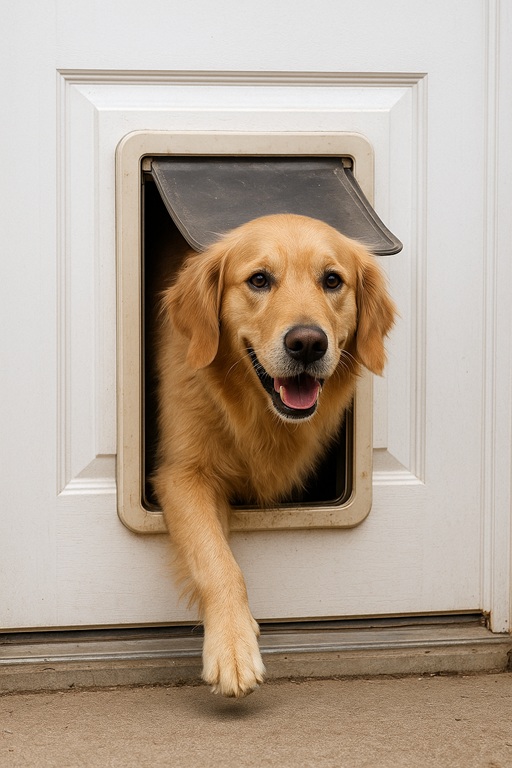
Some dogs learn to go outside but hesitate to come back in. Practice both directions separately, rewarding equally each time. Short, consistent training sessions work best. Multiple short sessions are more effective than long, tiring ones.
Celebrate every small success. With patience and repetition, your dog will start using the doggy door independently.
Common Challenges
- Flap too heavy: Some doors have stiff flaps that small dogs struggle to push. Adjust the tension or remove magnets temporarily.
- One-way usage: Encourage your dog to come in as well as go out by practicing both directions.
- Dependence on help: Avoid always holding the flap. Encourage your dog to push through independently.
Safety First
Once your dog is confident, ensure your yard is secure, free of hazards, and has access to shade and water. Supervise at first to make sure your adventurous pup stays safe.
Wrapping Up
Learning how to train a dog to use a doggy door is a rewarding experience for both you and your pup. Every small success builds trust, confidence, and communication. Timid puppies and cautious adult dogs can all learn with patience, positive reinforcement, and plenty of praise.
Protect Your Pup’s Adventures
As your dog gains independence and spends more time outside, there’s always a chance of accidents or unexpected illness. Pet insurance gives you peace of mind so you can focus on care instead of cost. Protect your adventurous pup and enjoy the freedom your doggy door brings without worry.
Find & Compare the Top Pet Insurance Companies
Get Quotes for Your Dog
References:
- https://www.akc.org/expert-advice/training/dog-not-using-dog-door/
- https://neaterpets.com/blogs/news/dog-door-training-guide
- https://wagwalking.com/training/use-a-doggy-door
Disclaimer
The information contained on this blog is intended for informational and educational purposes only and should not be construed as medical advice. It is not a substitute for professional veterinary care. Always consult with your veterinarian before making any changes to your pet's health care or treatment plan.
The authors of this blog are not veterinarians and do not claim to be experts in pet health. The information provided here is based on our own experiences and research, as well as information from reputable sources. However, we cannot guarantee the accuracy or completeness of this information.
We encourage you to do your own research and consult with your veterinarian before making any decisions about your pet's health.
Charitable Giving
With every pet insurance policy we generate, we do our bit to help less fortunate animals across Canada and the U.S. by making a donation to one of our chosen animal charities or rescue centres.
Compare top pet insurance providers plans.
Popular Articles
-
![Dog Personalities | 20 Dog Breeds & What Personality You Can Expect]() Dog Personalities | 20 Dog Breeds & What Personality You Can Expect
Dog Personalities | 20 Dog Breeds & What Personality You Can Expect
-
![Pitbull Weight and Growth Chart: Male, Female, and Puppy Growing Patterns]() Pitbull Weight and Growth Chart: Male, Female, and Puppy Growing Patterns
Pitbull Weight and Growth Chart: Male, Female, and Puppy Growing Patterns
-
![Beagle Weight and Growth Chart]() Beagle Weight and Growth Chart
Beagle Weight and Growth Chart
-
![Labrador Retriever Weight and Growth Chart: Male, Female and Puppy Growing Patterns]() Labrador Retriever Weight and Growth Chart: Male, Female and Puppy Growing Patterns
Labrador Retriever Weight and Growth Chart: Male, Female and Puppy Growing Patterns
-
![Shih Tzu Growth and Weight Chart]() Shih Tzu Growth and Weight Chart
Shih Tzu Growth and Weight Chart
-
![Cane Corso Weight and Growth Chart]() Cane Corso Weight and Growth Chart
Cane Corso Weight and Growth Chart

Enter your dog’s age in years and months to calculate their age equivalent to human years.
Calculate your dog’s ageEnter your cat’s age in years and months to calculate their age equivalent to human years.
Calculate your cat’s age